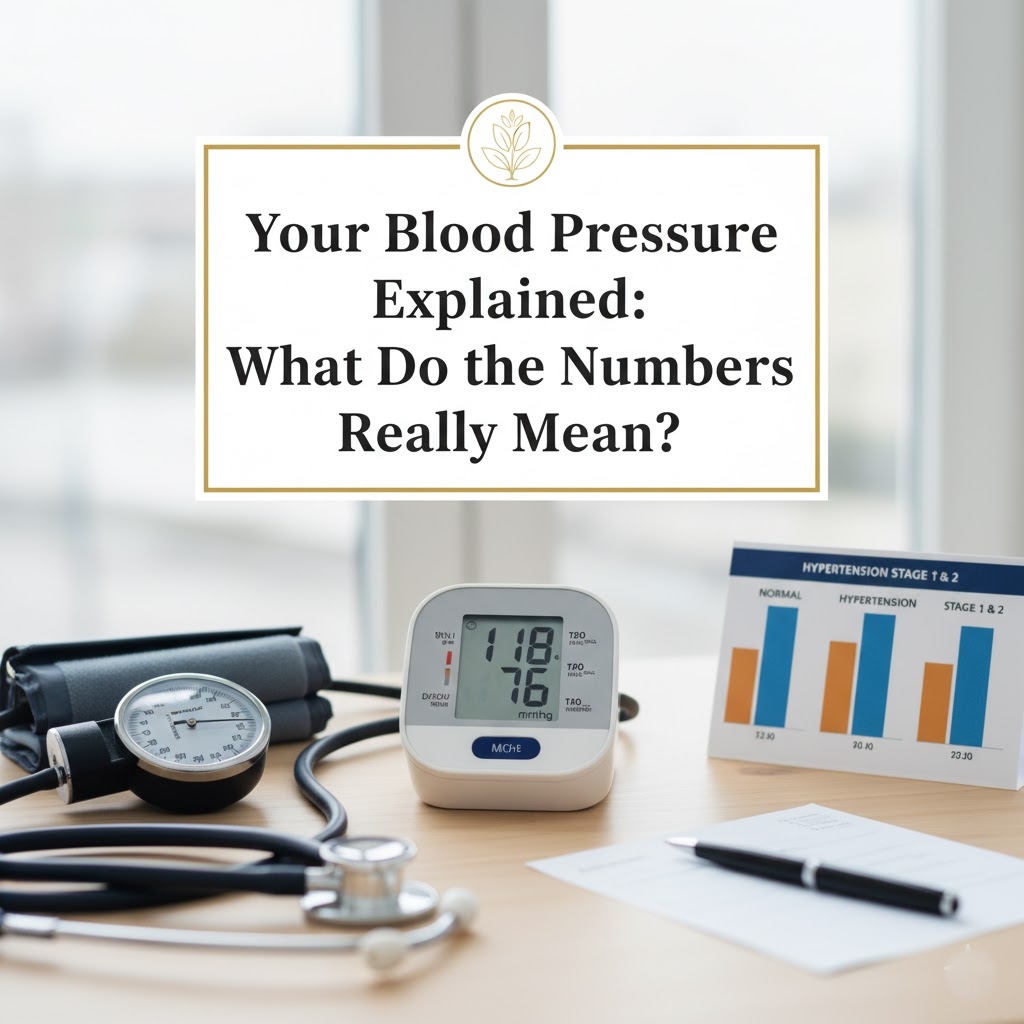
Understanding your blood pressure is one of the most critical steps you can take for your long-term health. Often called the “silent killer,” high blood pressure can have serious consequences, yet many people don’t know what their numbers mean. This guide will demystify your blood pressure readings, explaining the difference between normal, high, and low levels and the medical terms you need to know.
What is Blood Pressure?
Blood pressure is the force of your blood pushing against the walls of your arteries as your heart pumps. It’s recorded as two numbers:
- Systolic Pressure (the top number): This measures the pressure in your arteries when your heart beats.
- Diastolic Pressure (the bottom number): This measures the pressure in your arteries when your heart rests between beats.
The reading is given in millimeters of mercury (mmHg).
What is Normal Blood Pressure?
A normal blood pressure reading is essential for your cardiovascular system to function efficiently without being overworked.
- Medical Guideline: A reading of less than 120/80 mmHg is considered normal.
- What it Means: At this level, your heart and arteries are not under stress, and your risk for heart disease and stroke is significantly lower. Maintaining a healthy lifestyle with a balanced diet and regular exercise is key to keeping your numbers in this range.
High Blood Pressure (Hypertension)
Hypertension is the medical term for high blood pressure. It means the force of blood against your artery walls is consistently too high, which can damage your arteries over time and lead to serious health problems.
- Elevated: 120–129 systolic and less than 80 diastolic.
- Hypertension Stage 1: 130–139 systolic or 80–89 diastolic.
- Hypertension Stage 2: 140/90 mmHg or higher.
- What it Means: Consistently high readings indicate that your heart is working too hard to pump blood. This is a major risk factor for heart attack, stroke, kidney disease, and other complications. It often has no symptoms, which is why regular check-ups are so important.
Low Blood Pressure (Hypotension)
Hypotension is the medical term for low blood pressure. For many people, having lower blood pressure is a sign of good health. However, when it drops too low, it can cause symptoms and may indicate an underlying issue.
- Medical Guideline: A reading of 90/60 mmHg or lower is generally considered hypotension.
- What it Means: While not always a cause for concern, if your blood pressure is too low, it may not deliver enough oxygen and nutrients to vital organs. This can lead to symptoms like dizziness, lightheadedness, fainting, blurred vision, and fatigue.
Knowing your numbers is the first step to taking control of your heart health. Regular monitoring and consulting with your doctor can help you understand your readings and maintain a healthy blood pressure for life.