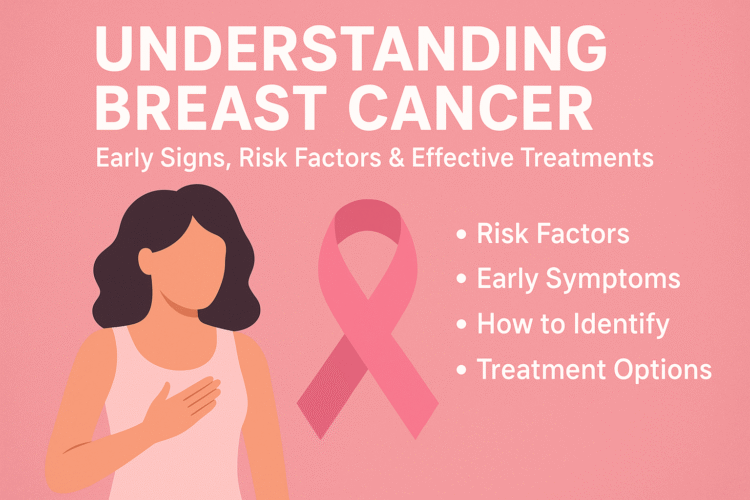
Breast cancer is one of the most common cancers among women worldwide, but early detection and awareness can save lives. Understanding the risk factors, symptoms, and treatment options is the first step toward prevention and recovery.
What is Breast Cancer?
Breast cancer occurs when abnormal cells in the breast grow uncontrollably, forming a lump or tumor. These cancerous cells can spread to other parts of the body if not detected early.
Common Risk Factors:
Several factors can increase the risk of breast cancer. These include:
- Age: Women over 40 are at higher risk.
- Family history: Having a close relative with breast cancer.
- Hormonal factors: Early menstruation or late menopause.
- Lifestyle habits: Smoking, alcohol consumption, and lack of physical activity.
- Obesity and poor diet: Can also contribute to higher risk.
Early Symptoms to Watch For:
Recognizing early symptoms is crucial. Common signs include:
- A lump or thickening in the breast or underarm area.
- Changes in breast shape, size, or appearance.
- Nipple discharge (other than breast milk).
- Redness, scaling, or dimpling of the breast skin.
- Persistent breast pain.
How to Identify Breast Cancer Early:
Self-examination once a month helps in noticing unusual changes. Women over 40 should get mammogram screenings regularly. If any abnormality is found, doctors may recommend ultrasound or biopsy tests.
Treatment Options:
Treatment depends on the stage and type of cancer. Common options include:
- Surgery: To remove the tumor or affected breast tissue.
- Radiation therapy: Destroys remaining cancer cells.
- Chemotherapy: Uses medicines to kill cancer cells.
- Hormone therapy or targeted therapy: Effective for hormone-related cancers.
Prevention Tips:
Maintain a healthy lifestyle, eat a balanced diet, exercise regularly, and avoid alcohol and smoking. Regular check-ups and self-awareness are the best tools for early detection.