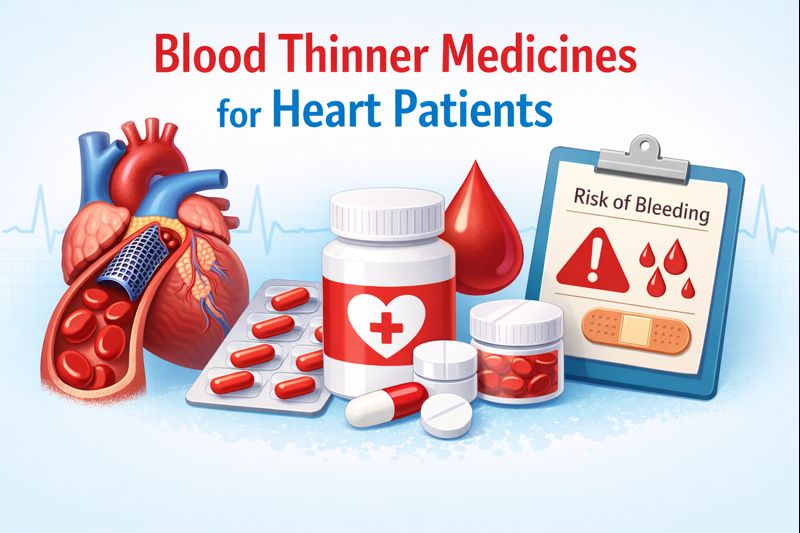
Heart disease is no longer limited to old age. Due to stress, sedentary lifestyle, unhealthy diet and rising diabetes and blood pressure, heart problems are affecting people in their 30s and 40s. One of the most commonly prescribed medicines for heart patients is blood thinners.
If you or someone in your family has undergone angioplasty, stent placement, suffered from heart attack, atrial fibrillation or has high clot risk, blood thinners become a lifesaving necessity.
This article explains blood thinner medicines for heart patients in simple language – their importance, how they work, benefits, risks, side effects and safe usage.
What Are Blood Thinner Medicines?
Blood thinners are medicines that reduce the ability of blood to form dangerous clots. They do not actually thin the blood, but they interfere with the clotting process so that blood flows smoothly inside arteries and veins.
Blood clots can block arteries supplying the heart or brain, leading to:
- Heart attack
- Stroke
- Pulmonary embolism
- Stent blockage
- Deep vein thrombosis (DVT)
That is why doctors prescribe blood thinners to heart patients to prevent these life-threatening complications.
Types of Blood Thinner Medicines
Blood thinners are mainly of two types:
1. Antiplatelet Drugs
These prevent platelets from sticking together and forming clots.
Common antiplatelet medicines include:
- Aspirin
- Clopidogrel
- Prasugrel
- Ticagrelor
They are widely used after heart attack and stent placement.
2. Anticoagulant Drugs
These slow down clot-forming proteins in the blood.
Common anticoagulants include:
- Warfarin
- Dabigatran
- Rivaroxaban
- Apixaban
- Edoxaban
They are often prescribed in atrial fibrillation, valve disease and clot disorders.
Why Are Blood Thinners So Important for Heart Patients?
After heart attack or stent surgery, the blood becomes more likely to form clots at the damaged artery site. A clot inside the stent can suddenly block blood flow and cause another heart attack.
Blood thinner medicines:
- Prevent stent blockage
- Reduce stroke risk
- Keep blood flowing freely
- Protect heart and brain arteries
- Improve long-term survival
For many heart patients, blood thinners are not optional – they are lifesaving therapy.
Major Conditions Where Blood Thinners Are Prescribed
Doctors prescribe blood thinners in:
- Heart attack
- Angioplasty with stent
- Atrial fibrillation
- Artificial heart valves
- History of stroke
- Blood clot disorders
- Deep vein thrombosis
- Pulmonary embolism
Advantages of Blood Thinner Medicines
1. Prevent Life-Threatening Clots
They drastically reduce the risk of heart attack and stroke.
2. Protect Stents
After angioplasty, blood thinners keep the stent open.
3. Improve Blood Circulation
They allow smooth blood flow in narrow arteries.
4. Reduce Hospitalizations
Patients on blood thinners have fewer emergency complications.
5. Long-Term Heart Protection
They provide continuous protection from future cardiac events.
Side Effects of Blood Thinner Medicines
Like all medicines, blood thinners also have side effects. The most common problem is bleeding.
Common Side Effects
- Easy bruising
- Bleeding gums
- Nose bleeding
- Blood in urine or stool
- Heavy menstrual bleeding
- Prolonged bleeding from cuts
Serious Warning Signs
- Vomiting blood
- Black or tarry stools
- Severe headache
- Sudden weakness or confusion
- Severe stomach pain
If any of these occur, immediate medical help is required.
Precautions While Taking Blood Thinners
1. Never Skip or Stop Suddenly
Stopping blood thinners without doctor advice can cause deadly clots.
2. Inform Every Doctor
Always tell your dentist or surgeon that you are on blood thinners.
3. Avoid Injury
Be careful with sharp objects and activities that can cause cuts.
4. Limit Alcohol
Alcohol increases bleeding risk.
5. Follow Correct Dose
Taking more or less than prescribed is dangerous.
Food and Lifestyle Tips
Some foods can interfere with blood thinner action.
Foods to Be Careful With
- Excess green leafy vegetables (especially with warfarin)
- Cranberry juice
- Alcohol
- Herbal supplements like ginseng and garlic pills
Healthy Lifestyle
- Walk daily
- Maintain healthy weight
- Control blood pressure and sugar
- Avoid smoking
- Manage stress
How Long Do Heart Patients Need Blood Thinners?
Duration depends on the condition:
- After stent: usually 6 months to 1 year or longer
- Atrial fibrillation: often lifelong
- Artificial valves: lifelong
- Previous stroke or clot: long-term or lifelong
Only your cardiologist decides duration.
Blood Thinners and Surgery or Dental Work
Before any surgery or tooth extraction:
- Never stop blood thinners yourself
- Doctor may adjust dose temporarily
- Some medicines need short break under supervision
Are Blood Thinners Safe for Long-Term Use?
Yes, millions of heart patients take blood thinners safely for years. When used correctly under medical supervision, their benefits are far greater than the risks.
Regular follow-ups, blood tests (for warfarin users), and strict dose compliance make them safe and effective.
Final Words
Blood thinner medicines for heart patients are among the most powerful tools modern medicine offers to prevent heart attack, stroke and sudden death. They save lives every day.
However, they must be taken responsibly, with full awareness of benefits, risks and precautions. Never change dosage or stop treatment without consulting your cardiologist.
With proper guidance, blood thinners do not weaken your body – they protect your heart and give you a longer, healthier life.