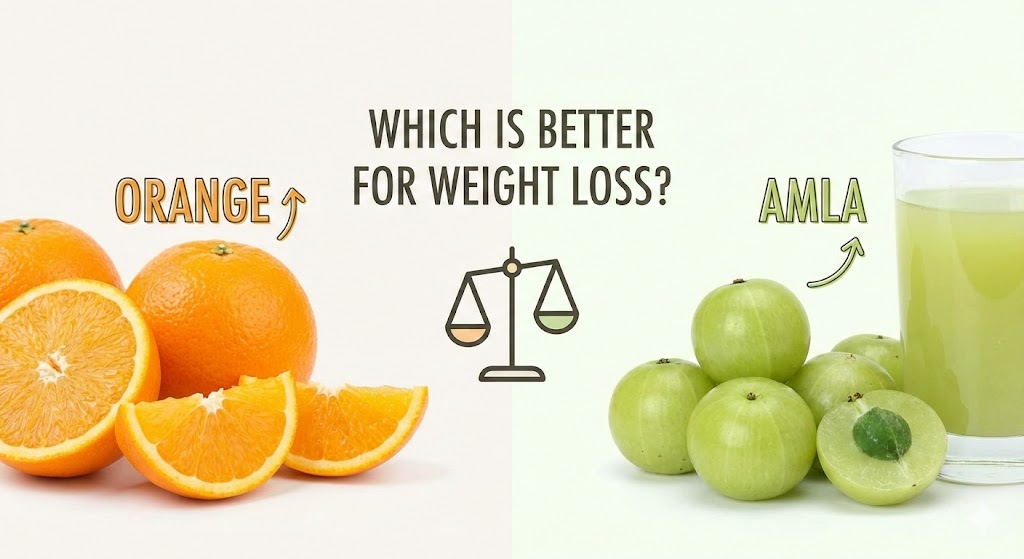
When it comes to natural weight loss, fruits rich in vitamin C often take center stage. Among them, orange and amla (Indian gooseberry) are two powerful contenders. Both are low in calories, high in nutrients, and widely recommended in weight-loss diets. But the real question is: Orange vs amla – which one is actually better for weight loss?
In this detailed comparison, we’ll analyze calories, fiber, metabolism benefits, digestion support, fat-burning potential, and practical usage to help you choose the right fruit for your weight-loss journey.
Why Vitamin C Matters for Weight Loss
Vitamin C is not just for immunity. Research shows that adequate vitamin C levels help:
- Improve fat oxidation
- Reduce cortisol (stress hormone)
- Enhance metabolism
- Support exercise performance
Both orange and amla are vitamin C powerhouses—but they work differently inside the body.
Nutritional Overview: Orange vs Amla
🍊 Orange (per 100g)
- Calories: ~47 kcal
- Vitamin C: ~53 mg
- Fiber: ~2.4 g
- Natural sugar: Moderate
- Water content: High
🌿 Amla (per 100g)
- Calories: ~44 kcal
- Vitamin C: ~600 mg
- Fiber: ~4.3 g
- Natural sugar: Very low
- Antioxidants: Extremely high
👉 Winner nutritionally: Amla (especially for weight loss and detox)
Fiber Content and Appetite Control
Fiber plays a crucial role in weight loss by keeping you full for longer and reducing unnecessary snacking.
- Orange contains soluble fiber (pectin), which helps control hunger and improves digestion.
- Amla contains almost double the fiber and slows down carbohydrate absorption, preventing insulin spikes.
✅ For appetite control and portion regulation: Amla is superior
Impact on Metabolism and Fat Burning
Orange and Metabolism
Oranges help:
- Boost hydration
- Improve workout energy
- Support mild fat burning
However, their natural sugar content can slow results if consumed excessively.
Amla and Metabolism
Amla is known in Ayurveda as a powerful metabolic booster. It:
- Improves liver function
- Enhances fat metabolism
- Regulates blood sugar levels
- Supports thyroid function (important for weight loss)
🔥 Fat-burning advantage clearly goes to amla
Blood Sugar Control: A Crucial Factor in Weight Loss
Weight gain is closely linked to blood sugar spikes.
- Oranges have a moderate glycemic index, which may not be ideal for insulin-resistant individuals.
- Amla has a very low glycemic impact, making it excellent for:
- Diabetics
- PCOS patients
- Belly fat reduction
✔️ Amla is safer and more effective for stable weight loss
Digestive Health and Detox Support
Good digestion equals better weight loss.
Orange
- Supports gut health
- Prevents constipation
- Refreshing and hydrating
Amla
- Acts as a natural detoxifier
- Improves gut flora
- Reduces bloating
- Enhances nutrient absorption
🧠 For long-term weight management, amla provides deeper cleansing benefits
Role in Reducing Belly Fat
Belly fat is often linked to inflammation and stress.
- Orange provides antioxidants but limited anti-inflammatory impact.
- Amla contains powerful polyphenols that:
- Reduce inflammation
- Lower cortisol levels
- Target visceral fat
🎯 Amla is more effective for stubborn belly fat
How to Consume for Weight Loss
Best Ways to Consume Orange
- Whole fruit (avoid juice)
- Pre-workout snack
- Mid-morning option
⚠️ Avoid orange juice—it lacks fiber and increases sugar intake.
Best Ways to Consume Amla
- Amla juice (20–30 ml with water)
- Raw amla slices with salt
- Amla powder with warm water
- Amla with honey (optional)
⏰ Best time: Early morning on an empty stomach
Which One Should You Choose?
Choose Orange if:
- You want a refreshing fruit
- You are physically active
- You don’t have blood sugar issues
- You need hydration support
Choose Amla if:
- Your goal is fat loss
- You have belly fat
- You want faster metabolism
- You prefer Ayurvedic, natural remedies
- You have diabetes or hormonal imbalance
Final Verdict: Orange vs Amla for Weight Loss
While both fruits are healthy, amla clearly wins as the better option for weight loss due to its:
- Higher fiber
- Superior vitamin C content
- Blood sugar regulation
- Metabolism-boosting properties
- Belly-fat-reducing effects
That said, oranges can still be part of a balanced diet—but if weight loss is your priority, amla should be your daily go-to fruit.