Introduction: Is Papaya Always Safe?
Papaya is often called a superfruit – rich in vitamin C, digestive enzymes, fiber, and antioxidants. From weight loss diets to glowing skin routines, papaya seems to be everywhere.
But here is the truth most people don’t talk about: papaya is not safe for everyone.
Doctors and nutrition experts warn that for some people, papaya can actually harm health instead of improving it.
If you eat papaya daily without knowing your body type, you may be inviting unwanted side effects.
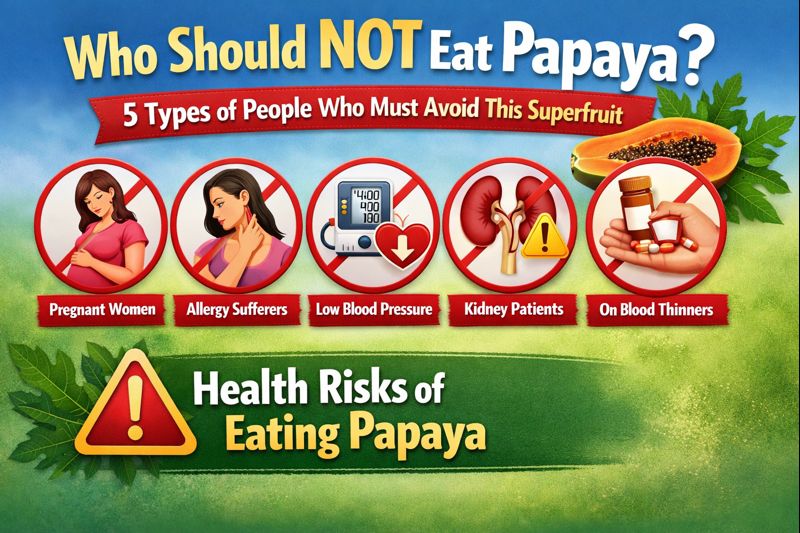
Let’s explore who should not eat papaya and why these 5 groups must avoid it or eat it with extreme caution.
1. Pregnant Women – Especially in Early Pregnancy
This is the most important warning.
Why Papaya Is Risky During Pregnancy
Papaya contains an enzyme called papain and a latex-like substance found especially in raw or semi-ripe papaya. These compounds:
- Stimulate uterine contractions
- Can soften the cervix
- Increase the risk of miscarriage or premature labor
Unripe and semi-ripe papaya are particularly dangerous.
What Doctors Say
Gynecologists advise pregnant women to completely avoid raw and semi-ripe papaya. Even ripe papaya should only be consumed after medical consultation.
Possible Side Effects
- Abdominal cramps
- Uterine bleeding
- Miscarriage in early months
Verdict:
Pregnant women should avoid papaya unless their doctor specifically allows ripe papaya in very small quantities.
2. People With Papaya Allergy or Latex Allergy
If you are allergic to latex, there is a strong chance you are also allergic to papaya.
Why?
Papaya contains chitinase enzymes, which can cross-react with latex proteins. This condition is known as latex-fruit syndrome.
Symptoms of Papaya Allergy
- Itching in mouth or throat
- Swelling of lips or tongue
- Skin rashes or hives
- Breathing difficulty
- Severe cases: anaphylactic shock
Many people ignore mild itching after eating papaya, but this is an early warning sign.
Verdict:
Anyone with latex allergy or past allergic reactions to papaya should completely avoid this fruit.
3. People With Low Blood Pressure (Hypotension)
Papaya is known to naturally lower blood pressure. While this is great for hypertension patients, it can be dangerous for people who already have low BP.
How Papaya Affects Blood Pressure
- Papaya is rich in potassium and antioxidants
- These compounds relax blood vessels
- This leads to further lowering of blood pressure
Possible Problems
- Dizziness
- Weakness
- Fainting spells
- Irregular heartbeat
If your BP is already below normal, eating papaya regularly may worsen your condition.
Verdict:
People suffering from low blood pressure should avoid papaya or eat it only after medical advice.
4. People With Kidney Stones or Chronic Kidney Disease
Papaya contains a high amount of potassium. While potassium is essential for health, excess potassium is harmful for people with kidney issues.
Why Kidneys Struggle With Papaya
Damaged kidneys cannot remove excess potassium efficiently. This leads to a condition called hyperkalemia, which can be life-threatening.
Symptoms of High Potassium
- Muscle weakness
- Nausea
- Irregular heartbeats
- Sudden cardiac arrest in extreme cases
Hidden Danger
Many kidney patients think fruits are always safe – but papaya can silently increase potassium levels.
Verdict:
People with kidney disease or a history of kidney stones must limit or avoid papaya.
5. People Taking Blood-Thinning Medications
Papaya can interfere with blood clotting due to its natural compounds.
How Papaya Affects Blood Thinners
Papaya enhances the blood-thinning effect of medicines like:
- Warfarin
- Aspirin
- Clopidogrel
This combination can lead to excessive bleeding.
Risk Symptoms
- Frequent nosebleeds
- Bleeding gums
- Blood in urine or stool
- Unexplained bruising
Verdict:
If you are on blood-thinning medication, consult your doctor before adding papaya to your diet.
Other People Who Should Be Careful
Apart from the five main groups, the following people should also limit papaya intake:
- People with thyroid disorders
- Individuals with stomach ulcers
- People suffering from acid reflux (GERD)
Papaya enzymes may irritate the digestive lining in sensitive individuals.
Ripe vs Raw Papaya – Which Is Safer?
| Type of Papaya | Safety Level |
|---|---|
| Raw / Semi-ripe Papaya | Highly unsafe for pregnant women |
| Fully Ripe Papaya | Safer but still risky for allergy, BP, kidney & medicine patients |
Never assume ripe papaya is completely harmless.
How Much Papaya Is Safe?
For healthy adults:
- 1 small bowl (100–150 grams)
- 2–3 times a week only
Daily consumption is not recommended unless approved by a nutritionist.
Final Thoughts
Papaya is not a one-size-fits-all fruit.
While it offers many health benefits, doctors clearly state that these 5 people must avoid papaya:
- Pregnant women
- People with papaya or latex allergy
- Low blood pressure patients
- Kidney disease patients
- People on blood-thinning medicines
Listening to your body and consulting a doctor before making papaya a daily habit can save you from serious health risks.
Remember: Sometimes, even a superfruit can become a silent enemy.