Heart disease remains one of the leading causes of death worldwide. Many people assume that a heart attack happens suddenly without warning. However, in reality, the body often sends several signals before a serious blockage occurs in the heart’s arteries. Recognizing these warning signs early can help prevent severe complications and even save lives.
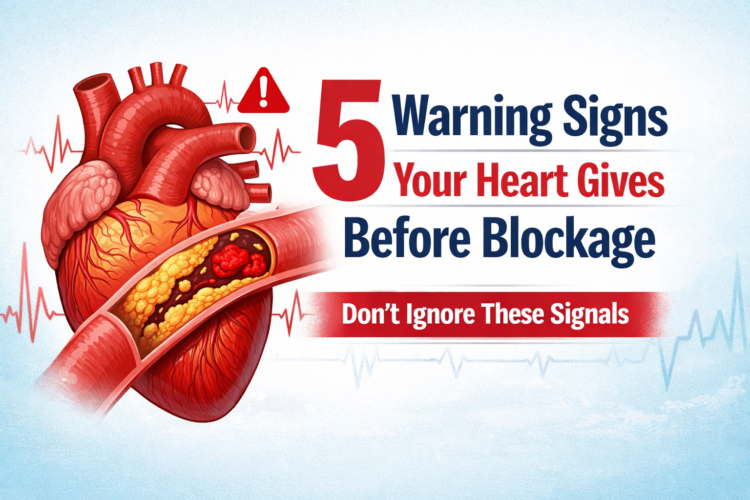
The heart works tirelessly, pumping blood throughout the body. When arteries supplying the heart become blocked due to cholesterol buildup, fatty deposits, or plaque formation, the blood flow decreases. This condition is known as coronary artery disease, which can eventually lead to a heart attack.
The alarming part is that many people ignore the early signs, thinking they are minor issues like fatigue or indigestion. But these symptoms may be the heart’s way of asking for help.
Here are five important warning signs your heart may give before a blockage occurs.
1. Chest Discomfort or Pressure
One of the most common early signs of heart blockage is chest discomfort. Many people describe this sensation as pressure, tightness, heaviness, or burning in the chest.
This discomfort may appear when you are:
- Walking or exercising
- Climbing stairs
- Feeling stressed or anxious
The pain may last for a few minutes and then disappear. Because it comes and goes, people often ignore it.
However, chest pressure can indicate reduced blood flow to the heart muscles, a condition called angina. If you frequently feel unexplained chest tightness, it is essential to consult a doctor immediately.
Ignoring this sign can lead to a complete blockage, which may result in a heart attack.
2. Unusual Fatigue
Persistent or unusual fatigue is another early warning sign many people overlook.
If you suddenly feel extremely tired after doing simple daily activities like:
- Walking short distances
- Doing household chores
- Climbing a few steps
then it might be a sign that your heart is struggling to pump blood efficiently.
When arteries become partially blocked, the heart must work harder to circulate blood throughout the body. This extra effort can make you feel constantly exhausted, even after getting enough rest.
Women especially report fatigue as one of the earliest symptoms of heart problems.
If you notice sudden unexplained tiredness lasting for days or weeks, it should not be ignored.
3. Shortness of Breath
Difficulty breathing or shortness of breath is another important warning sign of potential heart blockage.
When the heart cannot pump blood properly due to narrowed arteries, oxygen supply to the body decreases. As a result, you may experience:
- Breathlessness during normal activities
- Difficulty breathing while lying down
- Feeling like you cannot take a full breath
Many people assume shortness of breath is related to lung problems, aging, or lack of fitness. However, it can also indicate that the heart is not receiving enough oxygen-rich blood.
If breathlessness appears suddenly or worsens over time, medical evaluation is necessary.
4. Pain in Other Parts of the Body
Heart-related pain does not always stay limited to the chest. It can spread to other parts of the body, including:
- Left arm
- Both arms
- Jaw
- Neck
- Back
- Shoulders
This type of pain occurs because the nerves connected to the heart also connect to these areas.
Many individuals experience arm or jaw pain without realizing it is related to heart problems.
The pain may feel dull, aching, or sharp and may come and go. If it occurs along with chest discomfort, fatigue, or breathlessness, it should be taken seriously.
Ignoring this symptom can delay diagnosis and increase the risk of severe heart damage.
5. Sudden Sweating, Nausea, or Dizziness
Another warning sign of heart blockage is sudden unexplained sweating or dizziness.
You may experience:
- Cold sweats
- Nausea
- Lightheadedness
- Feeling faint
These symptoms occur when the body reacts to reduced blood flow to the heart.
Sometimes people mistake these symptoms for digestive problems or stress. However, if they occur along with other warning signs such as chest discomfort or breathlessness, they may indicate a developing heart problem.
Early medical attention can prevent the situation from becoming life-threatening.
Why These Warning Signs Occur
Heart blockage usually develops gradually over many years due to the buildup of plaque in the arteries. This buildup is often caused by lifestyle factors such as:
- High cholesterol levels
- Smoking
- High blood pressure
- Diabetes
- Obesity
- Lack of physical activity
- Unhealthy diet
As the arteries narrow, the heart receives less oxygen-rich blood. This reduced blood supply causes the symptoms mentioned above.
Detecting the problem early allows doctors to recommend treatments such as lifestyle changes, medications, or procedures like angioplasty to restore blood flow.
Who Is at Higher Risk?
Some people have a higher risk of developing heart blockage. Risk factors include:
- Age above 40
- Family history of heart disease
- High cholesterol
- Diabetes
- Smoking
- Stressful lifestyle
- Sedentary habits
If you fall into any of these categories, it is especially important to pay attention to early warning signs.
Regular health check-ups, cholesterol tests, and blood pressure monitoring can help detect heart problems before they become serious.
How to Protect Your Heart
The good news is that many heart problems can be prevented through healthy lifestyle choices.
Here are some simple steps to keep your heart healthy:
Eat a Heart-Friendly Diet
Focus on foods that support cardiovascular health, such as:
- Fruits and vegetables
- Whole grains
- Nuts and seeds
- Healthy fats like olive oil
- Lean protein sources
Avoid excessive sugar, processed foods, and saturated fats.
Stay Physically Active
Regular exercise improves circulation, lowers cholesterol levels, and strengthens the heart.
Aim for at least 30 minutes of physical activity daily, such as walking, cycling, or yoga.
Manage Stress
Chronic stress can increase blood pressure and heart disease risk. Practicing meditation, deep breathing, or relaxation techniques can help.
Avoid Smoking
Smoking damages blood vessels and significantly increases the risk of heart blockage.
Monitor Health Indicators
Regularly check:
- Blood pressure
- Blood sugar
- Cholesterol levels
Early detection of abnormalities can prevent major complications.
When to Seek Medical Help
If you experience any combination of the symptoms mentioned earlier, especially chest discomfort and breathlessness, seek medical help immediately.
Do not assume that the symptoms will disappear on their own. Early diagnosis can prevent a minor issue from becoming a life-threatening emergency.
Timely treatment may include medications, lifestyle changes, or medical procedures that restore blood flow and protect heart function.
Final Thoughts
Your heart is constantly working to keep you alive and healthy. Before a serious blockage occurs, it often sends several warning signals.
Symptoms like chest pressure, unusual fatigue, shortness of breath, pain in the arms or jaw, and sudden sweating should never be ignored.
Recognizing these signs early and taking prompt action can save lives.
Taking care of your heart today through healthy habits and regular medical check-ups is the best way to ensure a long and active life.
Remember, listening to your body’s warning signals can prevent a major heart crisis tomorrow.