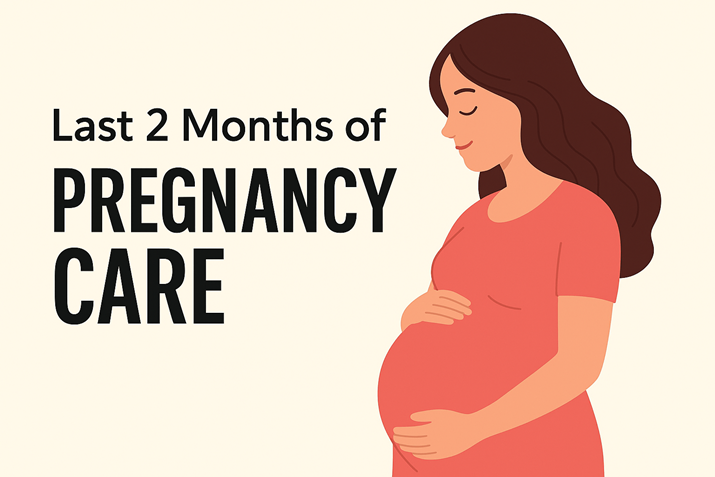
The last two months of pregnancy—the 8th and 9th months—are the most crucial phase of your entire maternity journey. This is the time when your baby’s organs mature, the body prepares for labor, and emotional as well as physical changes peak. Proper care during this period ensures safe delivery, stable health, and a strong baby.
In this detailed guide, we will cover diet, lifestyle, sleep, exercise, precautions, warning signs, mental health, and delivery preparation—everything you must know for the last trimester.
Let’s begin.
🌼 Understanding the Last Two Months of Pregnancy
During the 8th and 9th months, your baby grows rapidly, and your body enters labor-preparation mode. The uterus expands to its maximum size, the cervix softens, and hormonal changes intensify. You may experience:
- Braxton Hicks contractions
- Back pain
- Pelvic pressure
- Shortness of breath
- Slow digestion
- Frequent urination
- Sleep disturbance
This phase requires extra vigilance, nutritious food, ample rest, and proper medical check-ups.
🍎 1. Diet Tips for the Last Two Months of Pregnancy
Nutrition plays the biggest role in a healthy pregnancy. A well-balanced diet supports your baby’s brain development, strengthens bones, and boosts your body for labor.
🥦 1.1 Eat Iron-Rich Foods
Iron prevents anemia, improves blood flow, and prepares you for blood loss during delivery.
Include:
- Spinach
- Beetroot
- Jaggery (Gur)
- Dates
- Dried fruits
- Lean meats
- Legumes
Avoid: Tea/coffee right after meals—they block iron absorption.
🥛 1.2 Increase Calcium Intake
Calcium is crucial for your baby’s bones and teeth.
Best sources:
- Milk
- Yogurt
- Paneer
- Ragi
- Broccoli
- Almonds
Try to pair calcium with Vitamin D for better absorption.
🍽️ 1.3 Eat Small, Light Meals
Your stomach space shrinks in the last months, so heavy meals cause acidity.
Eat 5–6 small meals instead of 2–3 large meals.
🥑 1.4 Healthy Fats Are Essential
They support the baby’s brain development.
Add to diet:
- Ghee (in moderation)
- Avocado
- Coconut
- Nuts
- Seeds (flax, sunflower, chia)
- Olive oil
💧 1.5 Hydration is Key
Dehydration increases the risk of preterm labor.
- Drink 8–10 glasses of water
- Coconut water
- Lemon water
- Buttermilk
- ORS during hot weather
❌ 1.6 Foods to Avoid
- Raw papaya & pineapple
- Excess salt
- Street food
- Undercooked eggs/meat
- Excess caffeine
- Aerated drinks
- Too much sugar
🧘♀️ 2. Exercise & Physical Activity
Staying active helps with smooth delivery, easy labor, and good posture.
🚶 2.1 Walk Daily
A 30–45 minute walk improves blood circulation, reduces swelling, and energizes you.
🧘 2.2 Prenatal Yoga
Best poses for last months:
- Cat-Cow Stretch
- Butterfly Pose
- Pelvic Tilts
- Child’s Pose
- Deep Breathing
Avoid:
- Lying flat on your back
- Any posture that puts pressure on your belly
- Inversions
🧎♀️ 2.3 Squats (Only if Doctor Allows)
Squats open pelvic muscles and prepare the body for a normal delivery.
Start with 5–10 reps a day.
❗Important:
If you have placenta previa, high BP, low amniotic fluid, or twin pregnancy—avoid exercise without doctor’s approval.
😴 3. Sleep & Rest Tips
During the last months, sleeping can become challenging.
🛏️ 3.1 Sleep on Your Left Side
This position:
- Improves blood flow
- Helps digestion
- Reduces swelling
- Provides oxygen to the baby
Avoid sleeping on your back for long.
🛌 3.2 Use Pillows for Comfort
Place pillows:
- Under your belly
- Between your legs
- Behind your back
This reduces pressure on hips and spine.
⏳ 3.3 Take Short Naps
A 20–30 minute afternoon nap helps reduce fatigue.
🩺 4. Medical Care & Check-Ups
Never skip medical appointments in the last two months.
🧪 4.1 Regular Check-ups Include:
- Blood pressure
- Growth scan
- Baby’s heartbeat
- Blood sugar levels
- Urine test
- Weight monitoring
🧷 4.2 Understand Labor Symptoms
You must know when it’s time to rush to the hospital.
Signs include:
- Regular contractions
- Water breaking
- Mucus plug discharge
- Lower back pain
- Continuous pelvic pressure
💊 4.3 Take Supplements Regularly
Doctors usually prescribe:
- Iron
- Calcium
- Folic acid
- Vitamin D
- Omega 3 (if needed)
Never skip medicine in the last trimester.
🧼 5. Hygiene & Body Care
Good hygiene lowers the risk of infections.
⭐ 5.1 Maintain Personal Cleanliness
- Shower daily
- Wear loose, cotton clothes
- Keep genital area dry
⭐ 5.2 Vaginal Hygiene
Avoid:
- Scented products
- Harsh soaps
Use mild cleansers only.
⭐ 5.3 Prevent Stretch Marks
Apply:
- Almond oil
- Coconut oil
- Shea butter
- Vitamin E lotion
Consistency is the key.
🧠 6. Mental & Emotional Wellbeing
Mental health is as important as physical health.
💖 6.1 Practice Relaxation
Try:
- Meditation
- Deep breathing
- Soft music
- Reading
These reduce anxiety and balance hormones.
👪 6.2 Spend Time with Family
Emotional support is healing during pregnancy.
✍️ 6.3 Journal Your Feelings
Writing your thoughts helps reduce stress and fear of delivery.
👜 7. Prepare for Delivery (Hospital Bag Checklist)
Start preparing your hospital bag during the 8th month.
🎒 What to Pack:
For Mother:
- ID card & hospital documents
- Comfortable nightgowns
- Nursing bras
- Slippers
- Toiletries
- Sanitary pads
- Phone & charger
For Baby:
- 3–4 cotton dresses
- Baby blanket
- Mittens & socks
- Diapers
- Baby wipes
For Partner:
- Snacks
- Water bottle
- Power bank
Being prepared reduces stress when labor begins.
🛑 8. Warning Signs You Should Never Ignore
Immediately contact your doctor if you experience:
- Heavy bleeding
- Severe headache
- Sudden swelling
- Blurred vision
- No fetal movement
- High fever
- Severe abdominal pain
- Leaking fluid
These may indicate complications like preeclampsia or early labor.
💡 9. Tips for a Normal & Smooth Delivery
Many moms aim for a normal vaginal birth.
These tips help prepare your body:
- Walk daily
- Practice squats (if allowed)
- Do prenatal yoga
- Maintain ideal weight
- Stay mentally calm
- Eat nutritious food
- Avoid overthinking
- Sleep well
A calm mind helps during labor more than anything else.
🍀 10. Final Advice for the Last Two Months
- Stay positive
- Avoid long travel
- Do not lift heavy objects
- Avoid standing for long periods
- Wear comfortable shoes
- Maintain posture while sitting
- Keep emergency numbers handy
This is a very delicate phase, and with proper care, you can enjoy a healthy and safe delivery experience.
⭐ Conclusion
The last two months of pregnancy are filled with excitement, nervousness, and major physical changes. With the right diet, regular check-ups, safe exercises, proper sleep, and strong emotional support, you can make this journey smooth and joyful.
Always follow your doctor’s guidance, listen to your body, and stay stress-free. Remember—every positive habit you adopt now directly contributes to your baby’s healthy development and safe arrival.